

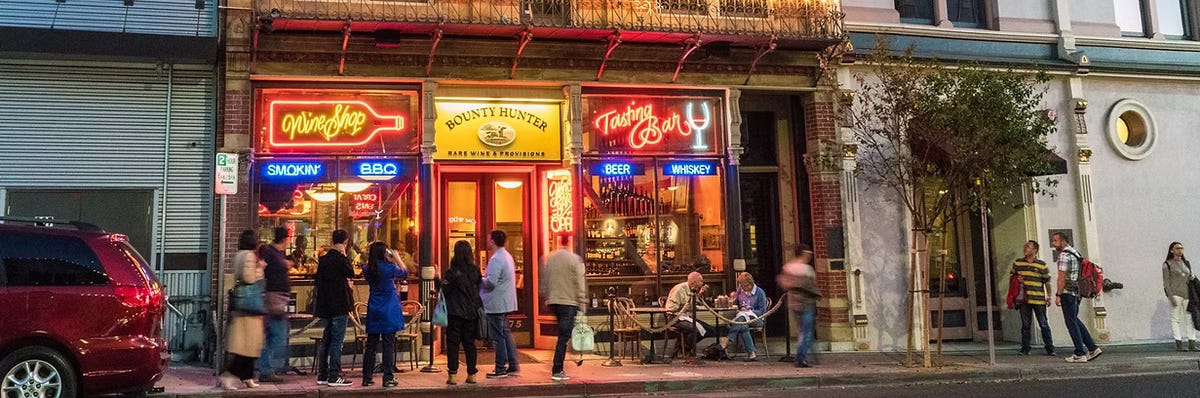
Back in Napa Valley, nearly as many visitors are arriving as ever. But the way they spend a day here has changed. Longer estate tastings mean fewer winery stops, while downtown tasting rooms make wine easier to fit into the day. Purchases downtown are smaller, and wine-club sign-up rates tend to be lower. The result is a surprising one: 3.8 million visitors are producing less long-term value for Napa wineries.
The visitors came back.
A familiar Saturday afternoon in downtown Napa now looks something like this. A couple finishes lunch on First Street and starts walking. There is no reservation to keep and no schedule to follow. An inviting tasting room is a few steps away. They go in, share a flight, buy a bottle, and continue down the street. They may stop somewhere else before dinner.
They may have had exactly the Napa afternoon they wanted. They have spent time with Napa wine without driving from estate to estate, buying a case, or joining a club. What changed is the economic trail they left behind.
And the valley is nearly as full of visitors as it was before the pandemic. Visit Napa Valley’s newly released 2025 study counts 3.8 million visitors. The 2018 study counted 3.85 million. Based on Visit Napa Valley’s published counts, visitor volume is essentially back to the all-time high.
That confirms the central finding of A False Signal: falling estate winery reservations did not mean the visitors had disappeared.
The headline visitor number hides the new problem. Napa Valley can be almost as full as it was before the pandemic while wineries capture less value from those visitors. The reason lies in what happens during the visitor’s day.
Where the Market Now Sits
The recovered visitor count does not erase the structural imbalance established in The Great Napa Valley Overpour, Part II.
That analysis estimated about 10.5 million annual tasting events from 3.7 million visitors. Applying the tasting-behavior assumptions used in that analysis to the new 3.8 million visitor count raises estimated demand only modestly, from about 10.5 million to about 10.7 million tasting events. If longer visits have reduced the number of winery stops per visitor, even 10.7 million is too high.
Napa Valley’s estimated tasting capacity remains roughly 15.9 million to 18.1 million visits a year, including about 5.6 million in urban tasting rooms. That leaves 5.2 million to 7.4 million tasting slots unfilled, roughly one-third to 41% of total capacity.
Visitor growth cannot realistically close that gap. The increase required would run into lodging constraints on the days when demand is strongest and community limits on additional traffic. The gap is structural.
Urban tasting rooms now account for roughly one-third of total capacity. At least 17 opened after 2015, 14 of them in the City of Napa. Estate wineries expanded too, adding more than 557,000 annual visitor slots through major permit modifications. Since late 2025, at least three urban rooms have closed and at least three have opened. The urban market is beginning to turn over rather than simply add capacity.
Using the tasting-behavior assumptions and the 60/40 estate-urban demand allocation used in Overpour, Part II, modeled urban utilization is now about 77%, compared with roughly 52% to 63% for estate winery tasting rooms. But the estate average conceals a wide divide. The best-known properties can operate near capacity during strong periods while many smaller wineries are modeled at only 20% to 40% utilization. Ten large estates alone account for more than 27% of permitted estate capacity and are among the most heavily utilized.
Hotels show the same disconnect between visitor count and business economics. Napa County hotels sold about 1.253 million room nights in 2025, 4.4% fewer than in 2019, while available room nights increased 5.2%. Occupancy fell from 71.1% to 64.6%. Yet hotel revenue increased 23.2% because room rates rose sharply.
The same number of visitors can produce very different results inside the businesses serving them. That is the market into which 3.8 million visitors returned: excess tasting capacity, an expanded urban tasting-room presence, sharply uneven estate winery utilization, and hundreds of wineries competing for the same finite visitor hours.
What the Visitor Count Misses
A visitor count says how many people arrived. It does not say how many wineries they visited or whether those visits led to a relationship that continued after they went home.
Nearly as many people are coming. What has changed is how many wineries they visit in a day and what continues after each visit.
That distinction was less important when the typical wine tourist drove the valley, stopped at several estates, bought wine along the way, and sometimes joined a club. Visitor growth and winery opportunity moved more closely together.
That connection has weakened. Wine remains central—61% of 2025 visitors cite wine or wineries as a trip motivator, and 90% do some wine activity while they are here—but the day contains more competing uses of time, and the wine encounters themselves take different forms.
The question for a winery is what those encounters lead to: what visitors buy, whether they join the club, and whether they buy again or stay connected after the trip.
Longer Visits, Fewer Stops
The first change happens on the clock.
Many estate tastings have become longer, more elaborate, and more expensive. Seated appointments replaced the old stand-up bar. Food pairings became common. A visit that once might have taken 45 minutes can now occupy 90 minutes or two hours.
Earlier Silicon Valley Bank research found that seated tastings increased average checks and wine-club sign-up rates. For the individual winery, that can be a good bargain. A guest who stays longer and receives more attention may spend more.
But the visitor still has only one day. A schedule that once accommodated three or four winery stops may now accommodate one or two. With 62% of Napa Valley visitors coming for the day, longer estate visits can reduce the total number of winery encounters produced by nearly the same visitor audience.
An individual winery can make its own appointment more valuable while the valley as a whole produces fewer winery encounters.
Napa Valley has also become a richer and more varied destination. Restaurants, shopping, music, cultural events, wellness, and other attractions have expanded, giving visitors more ways to spend the day. That diversity is worth celebrating. It makes the valley more interesting and gives visitors more reasons to come.
But the visitor still has only so many hours. As those other attractions take a larger share of the day, fewer hours remain for winery visits.
That raises the standard for the estate experience. A winery now competes for the visitor’s next hour with everything else the valley offers. It has to be meaningful and fun enough to earn that hour.
Falling visitation at estate wineries is already pushing some wineries back toward walk-ins and shorter formats, giving visitors more ways to fit wine into the day.
Urban Rooms Fit More Wine into the Day
Downtown puts some of those lost encounters back into the day.
Driving time disappears. Reservations become less important. A visitor can walk from lunch to a tasting, stay for a glass or a flight, move a block, and continue with the afternoon. Wine fits easily alongside restaurants, shopping, music, and other attractions.
That puts more tasting occasions back into the same day and helps explain why modeled urban utilization is higher than the estate average. But putting an encounter back into the day does not mean it has the same economic value.
A busy urban room can solve part of the problem created by a finite visitor day. The harder question comes when the couple walks back out the door: what was that visit worth?
What Is a Visit Worth?
The number of visitors through the door tells only part of the story.
The economic value of a visit depends on what visitors buy while they are there and whether the visit leads to a continuing customer relationship.
Recent industry data found an average wine purchase of about $135 in urban tasting rooms versus about $210 at estate winery tasting rooms—a difference of roughly $75.
That gap is understandable. A visitor on foot who expects to keep walking has less reason to buy a case that must be carried, shipped, or retrieved later. A bottle or two fits the itinerary more naturally. The urban tasting room can still be busy and profitable; the immediate purchase is simply smaller.
The comparison does not end with the sale. The latest industry survey puts the Napa tasting-room wine-club sign-up rate at about 3.7%. Current public data do not report separate rates for urban and estate winery tasting rooms, but earlier industry research generally found lower wine-club sign-up rates in urban rooms.
Wine-club sign-ups extend the customer relationship beyond the visit. If urban rooms produce fewer sign-ups as well as smaller purchases during the visit, the two effects reinforce each other.
An urban tasting room can be busy and still create less long-term customer value than its traffic alone suggests.
Why the Latest Visitor Count Produces Less for Wineries
Longer estate visits mean fewer winery encounters in the day. Urban rooms put some of those encounters back, but the visits tend to produce smaller purchases and, historically, lower wine-club sign-up rates.
The loss can occur twice: fewer chances to acquire a customer, then less value from some of the chances that remain. That is how nearly the same 3.8 million visitors can produce less long-term customer value for Napa wineries.
Some estate visits may be more valuable individually, and a longer visit is entirely rational when the extra time creates enough added value. For the valley, the question is what all of the visitor’s wine hours produce together.
The Urban Room as a Front Door
For wineries that can earn a place in the market, urban rooms have to improve both the immediate and the long-term value of the encounter.
Buying a case downtown should not create a logistical problem for someone spending the rest of the day on foot. Shipping, hotel delivery, later pickup, and similar arrangements can let the purchase fit the visit rather than compete with it.
The larger opportunity is turning a first visit into a continuing customer relationship. Commerce7’s 2026 analysis makes the scale clear: 47% of new customer records in its system are created at the tasting-room point of sale. The tasting room is one of the main places where a winery first meets a new customer.
Yet 53.7% of Commerce7 point-of-sale transactions had no customer profile attached. More than half of those transactions ended without even a customer profile the winery could use to stay in touch. Among first-time tasting-room purchasers in 2025 who did eventually buy again, the median second purchase came only 39 days later. The economic opportunity after the visit begins quickly.
An urban room that sells a tasting and a bottle but loses the identity of the buyer may be functioning more as a pleasant bar than as the beginning of a continuing relationship. The better measure is what happens after the guest leaves.
For wineries with an estate, the urban room can become a front door. It provides an easy introduction and can create enough curiosity to justify a later estate visit. The estate can then provide what downtown cannot: the vineyard, the cellar, a library wine, harvest, a particular person, or another experience rooted in place.
But the relationship can run in the other direction as well. An estate guest heading back to a hotel might be invited to stop by the urban room later for a glass of wine. It need not be another tasting or another sales pitch. It can simply extend the relationship into the visitor’s evening. The estate and urban room then become two parts of the same customer experience.
The handoff in either direction is delicate. A guest who chose downtown because it was easy did not ask to enter a sales funnel. An insistent invitation to the estate can feel like the sales office for a vacation development. An estate guest heading back to the hotel may simply want to relax. The second encounter has to feel natural rather than imposed.
Make the Estate Worth the Time
Estate visits have to earn the time they consume.
Longer should not be confused with better. The food-and-wine pairing and the formal progression through a line of glasses are useful formats, but they have become conventions. A visitor who can find a similar structure at many estates has little reason to devote two scarce hours to one particular winery.
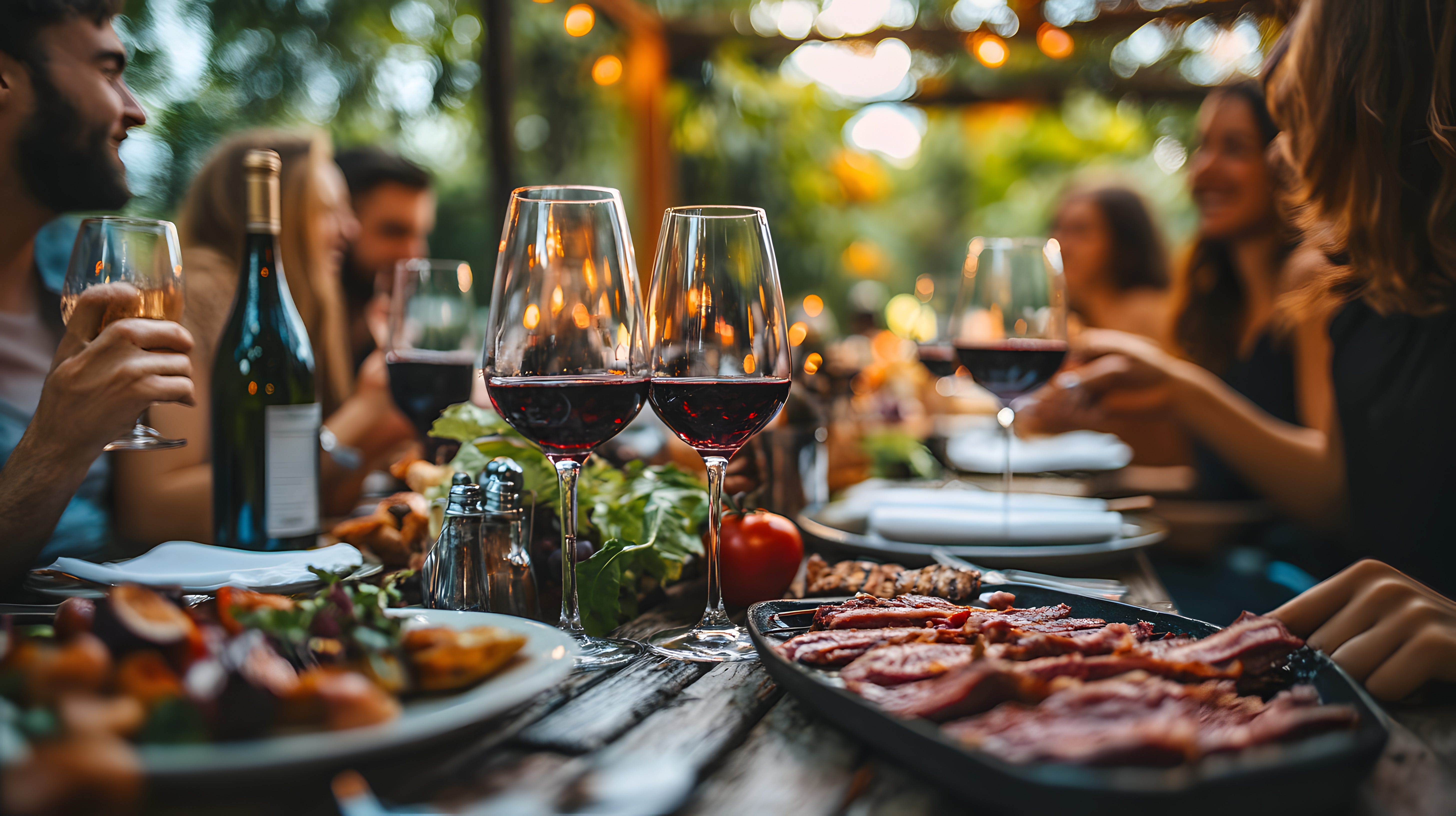
Consider a different estate experience: hanger steak coming off the grill at a picnic table, with a very good bottle of Cabernet already open. A $150 Cabernet does not require a white tablecloth, a formal dinner party, or an anniversary. It can be just as satisfying at a picnic table with friends.
That connects directly to an earlier essay, When Do You Actually Open It? Napa Cabernet needs more believable reasons to be opened. A prized wine that feels appropriate only for ceremonial occasions will be opened too rarely. The winery can demonstrate a different habit: great wine belongs at a backyard barbecue, on game day with friends, for a date night at home, over a slow Sunday meal, or simply on a Tuesday when dinner deserves something better.
An estate visit can teach that use. Napa Valley’s visitors are also younger than many people assume: 71% of visitors are under 55, and 35% of first-time visitors are between 25 and 35. Napa wineries have become very good at teaching visitors how to taste and judge wine. They can also show visitors how a great bottle fits into life after the trip. More occasions to open the wine create more occasions to buy it again.
Duration should vary as well. A serious estate experience does not have to consume two hours. Some visitors want depth; others want a compelling 30- or 45-minute encounter before moving on. The format should fit the customer and the occasion rather than be built on the assumption that more time automatically means more value.
The estate advantage is place. If the same tasting could be conducted in a hotel conference room, the winery has given up much of the reason for asking the visitor to drive there.
Make More Room in the Day
Some of the lost time can only be recovered across the valley.
Napa Valley wineries have spent years finding ways to make each appointment more valuable. Collectively, they have paid less attention to how many worthwhile winery visits can fit into a visitor’s day. That number shapes the opportunity available to everyone.
Some of the easiest gains come from removing time that adds little to the visit: unnecessary reservation hurdles, long waits or drives between stops, awkward pickup arrangements, and experiences stretched mainly to justify their price. The guest can still be unhurried.
More flexible visit lengths and selective walk-ins can use empty capacity. Better transportation and routing can reduce dead time between wineries. Shared delivery or shipping solutions can separate the purchase decision from the burden of carrying wine. Digital follow-up can move part of the selling process to after the visit rather than consuming more of the appointment.
The goal is to give back time spent traveling, waiting, dealing with wine purchases, or sitting through parts of an experience that add little value—without sacrificing what made the visit worthwhile. That leaves more of the visitor’s day available for wine.
Measure the Time You Ask For
Wineries already measure revenue per visit, average purchase, wine-club sign-ups, repeat purchases, and customer lifetime value. What they measure less often is the amount of the visitor’s day they require to produce those results.
That does not mean measuring how quickly a guest can be moved through a tasting room. A visitor who finishes a tasting and chooses to stay for another glass, talk with friends, walk the vineyard, or linger over the view is not wasting time. The distinction is between time the visitor chooses to spend and time imposed by the format that the visitor would not otherwise choose to spend.
At an estate winery, much of that required time is visible in the appointment book. A 90-minute tasting asks for 90 minutes of each guest’s day before the guest even arrives. In an urban tasting room, the equivalent is not total dwell time, because guests may choose to linger. It is the time required to complete the tasting or other structured experience. Neither measure has to be exact to be useful.
The economic question is what the required time produces. A two-hour estate appointment may create substantially more value than a one-hour visit and fully justify the additional hour. But if most of the purchasing, wine-club interest, satisfaction, and future relationship has already been created in the first hour, the second hour may add little. The same is true downtown if a tasting format keeps a visitor seated long after the experience has delivered most of its value.
This is different from simply calculating revenue or customer value per hour. Such a ratio could create an incentive to shorten visits and damage the experience. The useful question is whether additional required time improves the visitor’s experience or creates enough additional customer value to justify it.
That distinction has consequences beyond the individual winery. A guest who happily spends an extra hour at an estate has made a choice about how to use the day. A guest required to spend that hour by the tasting sequence, reservation structure, waiting, or other elements of the format has not made the same choice. Across millions of visits, those imposed hours reduce the number of worthwhile wine encounters that can fit into Napa’s finite visitor day.
The objective is not to shorten a good visit. It is to eliminate time imposed by the format that the visitor would not otherwise choose to spend.
The Limits of Better Execution
More than 500 wineries are drawing on the Napa Valley name, hundreds are competing for estate visitation, and the current tasting system can serve far more visits than the market produces. Doing a better job turning visitors into customers can improve the economics of a winery. It cannot make the aggregate capacity disappear.
Differentiation has the same limitation. A winery can become more distinctive relative to its peers. They cannot all become more distinctive than average at the same time. In an oversupplied market, better execution can shift visitors from one winery to another. It cannot create enough demand for everyone.
Napa Valley’s Reckoning made the uncomfortable implication explicit. Some wineries do not need another hospitality program or a sharper story. They need a smaller footprint, a lower price, a different wine, a merger, a sale, or an exit. Delay narrows those choices because inventory accumulates, cash tightens, and the value of the asset can deteriorate before the decision is finally made.
Making better use of visitor time and building stronger relationships with the people who visit can make the surviving system healthier. Those gains cannot create demand where none exists. Some tasting rooms, production plans, and luxury price points will still have to change or disappear.
Capacity is still a cost when there is no demand to use it.
The Opportunity Now
The 3.8 million visitor count is good news for Napa Valley. A richer mix of dining, culture, shopping, and entertainment is giving people more reasons to come and more ways to enjoy the valley.
A richer destination also divides a finite day. Longer estate experiences consume more of it, and the expanding choices beyond wine compete for the rest. Urban rooms recover some wine encounters, but some of those encounters can create less long-term customer value. A visitor can have a better Napa experience even as wineries receive fewer hours and less value from some of the encounters that remain.
Some wineries need to turn more downtown visitors into repeat customers, some need an estate experience worth the time, and some need a better way to keep the relationship going after the visit. Others have to accept that available visitor hours will not support the capacity they built.
Even though more visitors to Napa Valley might help, visitor growth cannot solve the structural imbalance. Napa is already attracting roughly as many visitors as it ever has, and the additional traffic required to absorb the excess tasting capacity is neither realistic nor desirable. Individual wineries can still improve their own position by attracting a larger share of those visitors, increasing the value of each visit, and matching their scale and format to the demand they can earn.
The visitors came back. Their day did not get any longer.
Next Week
What the Clock Couldn’t See
Baseball Fixed the Length of Its Games and Lost the Game Inside
* * *
Ted Hall is a vintner and rancher at Long Meadow Ranch in Napa Valley. His winemaking career spans more than 50 years; he was named the 2017 Grower of the Year by the Napa Valley Grapegrowers and previously served as chairman of Robert Mondavi Corp. He writes about economics, incentives, and how complex systems shape real-world outcomes across agriculture, food, wine, music, and culture.
The experiences behind these essays are collected in a memoir, Tell the Truth and Do the Right Thing — 125 stories from a life that has included McKinsey, Napa Valley, a Pacific crossing, and the Village Vanguard.
Napa is completely out of touch with reality. The “wine” tastes the same, it’s way overpriced for the times, people are turning away from alcohol. It’s a luxury. People can’t afford it. As you have pointed out, inventory tells the tale. Bulk wine and older vintages are going to be thrown away according to recent reporting.
Treasury took a $1 billion hit to their bottom line mostly due to their U.S. operations. Why is that?
Napa needs to sell what people want, not what they imagine. It’s not $150 commodity wine.
Ted Hall nails it (again). As consumer behaviors shift, the agile wineries will survive and thrive. Less adaptable ones will wither away like vines w/o water.