
When Do You Actually Open It?
The Real Occasions for Napa Cabernet

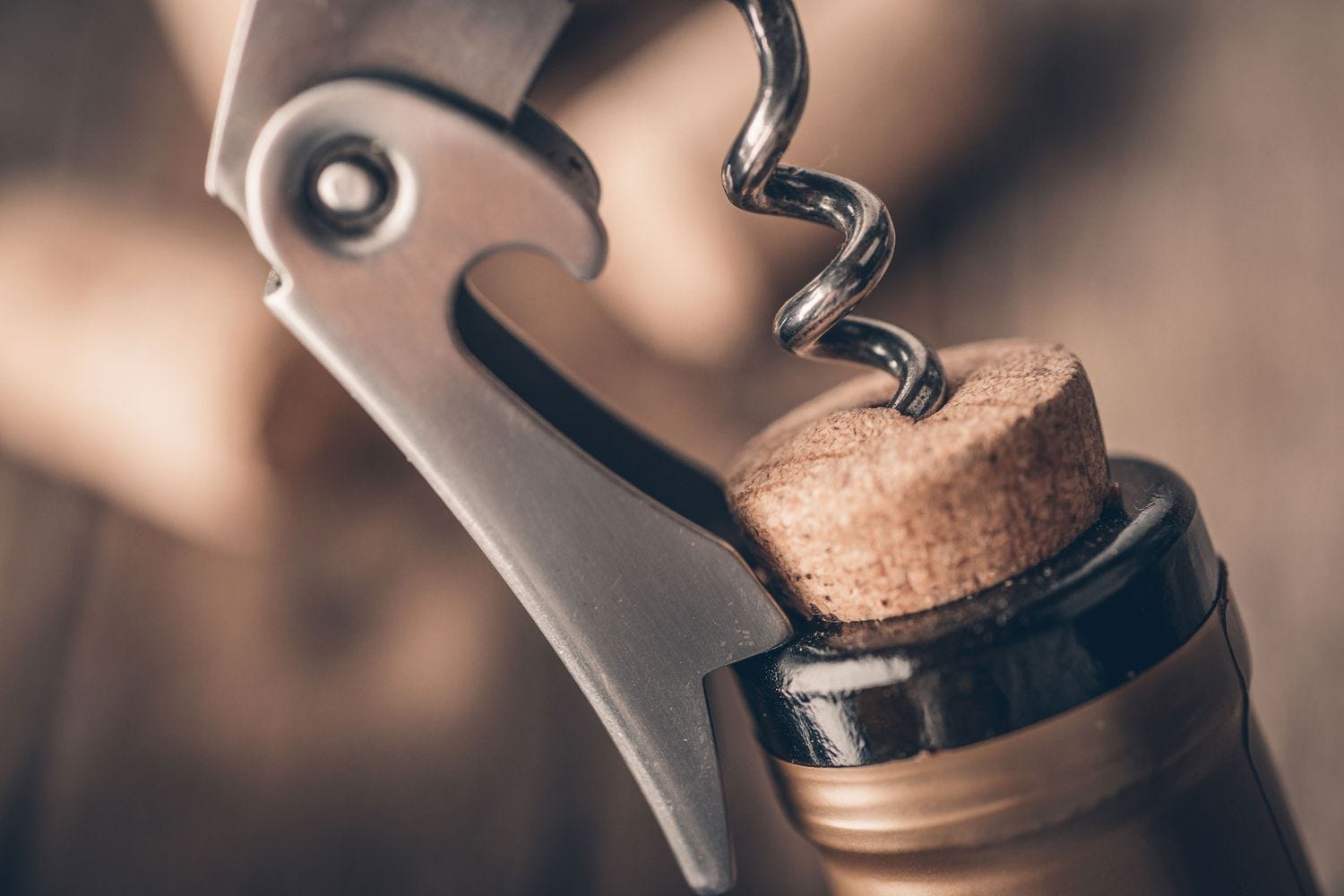
This is a short interlude between Parts II and III of a series on Napa Cabernet. After asking how the wine is made and how it is judged, there is a simpler question: when does it actually get opened?
After publishing Part II—on reconnecting Napa Cabernet to the table—I received a number of thoughtful responses. Many agreed with the central point: the problem is not simply price, production, or even style.
It is use.
Wine only matters when it is opened. And if a category drifts into a place where it is admired more than consumed, collected more than shared, or discussed more than experienced, something essential has been lost.
That raises a simple question.
When, exactly, do you open a bottle of Napa Cabernet—and does the wine inside it actually meet the moment?
Beyond the “Special Occasion”
For years, the industry’s answer has been some version of the same idea: save it for something important.
But importance is too rare a fuel source.
If a $200 or $300 bottle is reserved only for the handful of ceremonial moments in a year—holidays, anniversaries, major milestones—it cannot sustain the level of production, inventory, and expectation that now exists.
The category does not need more reverence. It needs more relevance.
Not casualization, but credibility. Not fewer great bottles, but more believable reasons to open them.
What Real Occasions Look Like
In response to that question, I began assembling a list—not of staged luxury experiences, but of moments that actually occur in people’s lives. Moments where opening a great bottle feels natural, deserved, and worth repeating.
Some of these came directly from reader responses to the previous essay. Others reflect situations that anyone who has lived with wine for long enough will recognize.
There is a complication. Identifying more occasions does not guarantee that the wine will meet them. Many Napa Cabernets, particularly those shaped for the score-driven tasting environment, are not built for the range of settings people actually live in—lighter menus, mixed tables, longer meals, or evenings where the wine needs to support rather than dominate.
That gap matters. An occasion can justify opening a bottle, but it cannot ensure that the wine will work once it is poured. In practice, that comes down to a simple question: does the wine match the food, the setting, and the pace of the evening?
Here is a starting point.
The Top 20 Occasions for Napa Cabernet
The Backyard Barbecue Done Right — a summer evening with close friends, a grill that has been tended all afternoon, and food that calls for something better.
The Wild Game Dinner — venison, elk, boar, or duck prepared with care, food that calls for a wine with equal depth and structure.
The Tough Week Reward — a Friday night when nothing is being celebrated except the fact that the week is over.
Closing the Deal — a quiet dinner or small gathering to mark a professional milestone that took longer—and cost more—than anyone expected.
The First Cold Night — the first evening of the season when the air turns, the house closes up, and something richer finally feels right.
Checking In on the Cellar — opening a bottle not for ceremony, but curiosity, to see how it is evolving and to share that moment with someone who cares.
Game Day, Elevated — a football Sunday or major game where the food is serious enough to justify opening something equally serious.
Date Night at Home — cooking together instead of going out, taking the time to do it properly, and choosing a bottle that matches the effort.
A Shared Bottle Among Friends — pooling resources to open something none of you would open alone, and talking about it for hours.
Paying Something Off — a private milestone—debt cleared or a long obligation finished—marked quietly but meaningfully.
The Breakup or Divorce Night — not a celebration exactly, but a turning point marking the end of one chapter and the beginning of another.
The Slow Sunday Meal — something braised or simmered all afternoon, the kitchen warm, the day unhurried, the bottle opened before dinner.
Reconnecting with an Old Friend — someone you have not seen in years, where the conversation matters more than the wine, but the wine helps.
The Firepit or Late Night Outside — a long conversation outdoors, where the evening stretches and the bottle lasts.
After a Personal Achievement — a race completed, a project finished, something difficult done, marked with a bottle that feels earned.
Dessert That Deserves It — dark chocolate or something equally rich, paired with a wine that has softened enough to meet it.
The Empty House — the day the last child leaves, or the house changes in some fundamental way—quiet, reflective, and worth marking.
The Tuesday Night Splurge — opening something exceptional for no reason at all, precisely because there is no reason.
The First Night in a New Home — the first real meal in a new place, setting a tone for what life there might become.
The Night Before You Leave — the evening before a trip or transition, when anticipation is high and routine has already loosened its grip.
What This List Reveals
These occasions are not reserved for Napa Cabernet. They are contested. Many outstanding wines compete to elevate the same moments—Bordeaux, other Cabernet-based wines, and more food-friendly styles such as those from Tuscany.
For Napa to regain its position, its wines must win these occasions at the table—more often than not.
What is striking about these occasions is not their extravagance, but their familiarity. What they share is not just frequency, but compatibility—the conditions under which the wine actually works.
They are not rare. They are not ceremonial in the traditional sense. They do not depend on perfection. They are simply moments when life opens up enough to justify something better.
And that is the point.
A category cannot thrive if its primary occasions are too infrequent. It cannot rely solely on weddings, anniversaries, and holidays. It must embed itself in a broader rhythm of life—one that includes relief, transition, connection, and even quiet defiance.
Luxury, in this sense, is not about distance from everyday life.
It is about elevating it.
Where This Leads
When I asked, at the end of the last piece, when people actually open these bottles, the responses were immediate—and revealing.
They reflect moments that anyone who has lived with wine for long enough will recognize.
What matters is not the completeness of the list. It is the shift in perspective.
Wine does not live in categories. It lives in moments.
And if Napa Cabernet is going to reconnect with the table, it will not be because we found a better way to describe the wine.
It will be because more people found more reasons to open it.
Upcoming
Part III: When the Market Clears
How Napa’s Wine Boom Reached Its Limits—and What Happens Next
* * *
Ted Hall is a vintner and rancher at Long Meadow Ranch in Napa Valley. A winemaker for more than 50 years and a former chairman of Robert Mondavi Corp., he is also a Senior Partner Emeritus at McKinsey & Company and a founder of the McKinsey Global Institute. He writes about economics, incentives, and how complex systems shape real-world outcomes across agriculture, food, wine, and consumer markets.
From your description, the value of Cabernet vineyards may will drop a lot. My experience has included various occasions when some other wonderful wine was eliminated to make more room for Cab. It would be interesting to hear your speculations about what varietals might replace some Cab going forward.
You must have been reading my mind when you wrote this. I didn't expect the wild boar I harvested in Mendocino to be so dark red yet tender and flavorful. Cabernet was perfect.