
The Marginal Acre
The Growers Who Absorb the Correction

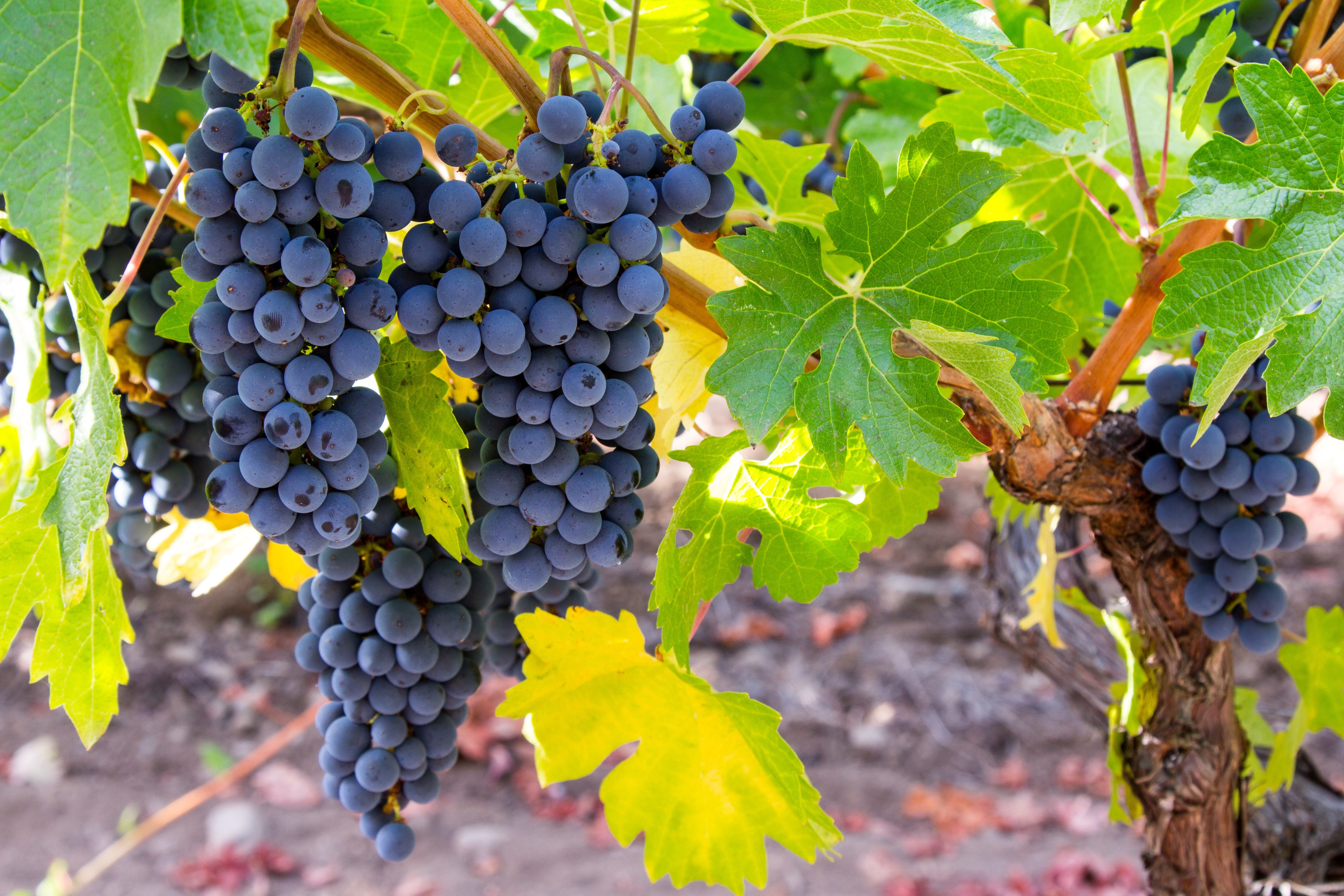
The essays in the Napa Valley series have stood mostly inside the winery. This one turns to the grape growers — and in particular to the smallest and most exposed — to ask what the reckoning underway means for them.
The most recent Substack posting announced a pause for July. However, with the 2026 harvest fast approaching, this essay on the plight of the small independent vineyard owner is too timely to defer.
A note on the method: the economic analysis in this essay draws on publicly available Napa County permit data, which identifies vineyard parcels by size, ownership, and farming arrangement. The UC Davis cost-of-production study provided farming cost data, updated to current Napa input costs; the California Grape Crush Report provided grape pricing data. These sources were combined into a comprehensive database using geolocation and other publicly available information. The analysis is our own.
Napa’s correction is visible in the tasting rooms, in the inventory data, and in the quiet unwinding of brands that ran out of runway. What is less visible, because it happens not in the winery but in the vineyard rows, is the parallel correction unfolding among grape growers — and the very different arithmetic they face.
Wineries and growers are both caught in the same correction — a market that recruited more supply than it could sustain. They did not enter it with the same resources, the same balance sheets, or the same options. Understanding why requires going back to the arrangements that built both into the same system — and understanding how differently that system is now resolving for each.
The Annuity with a View
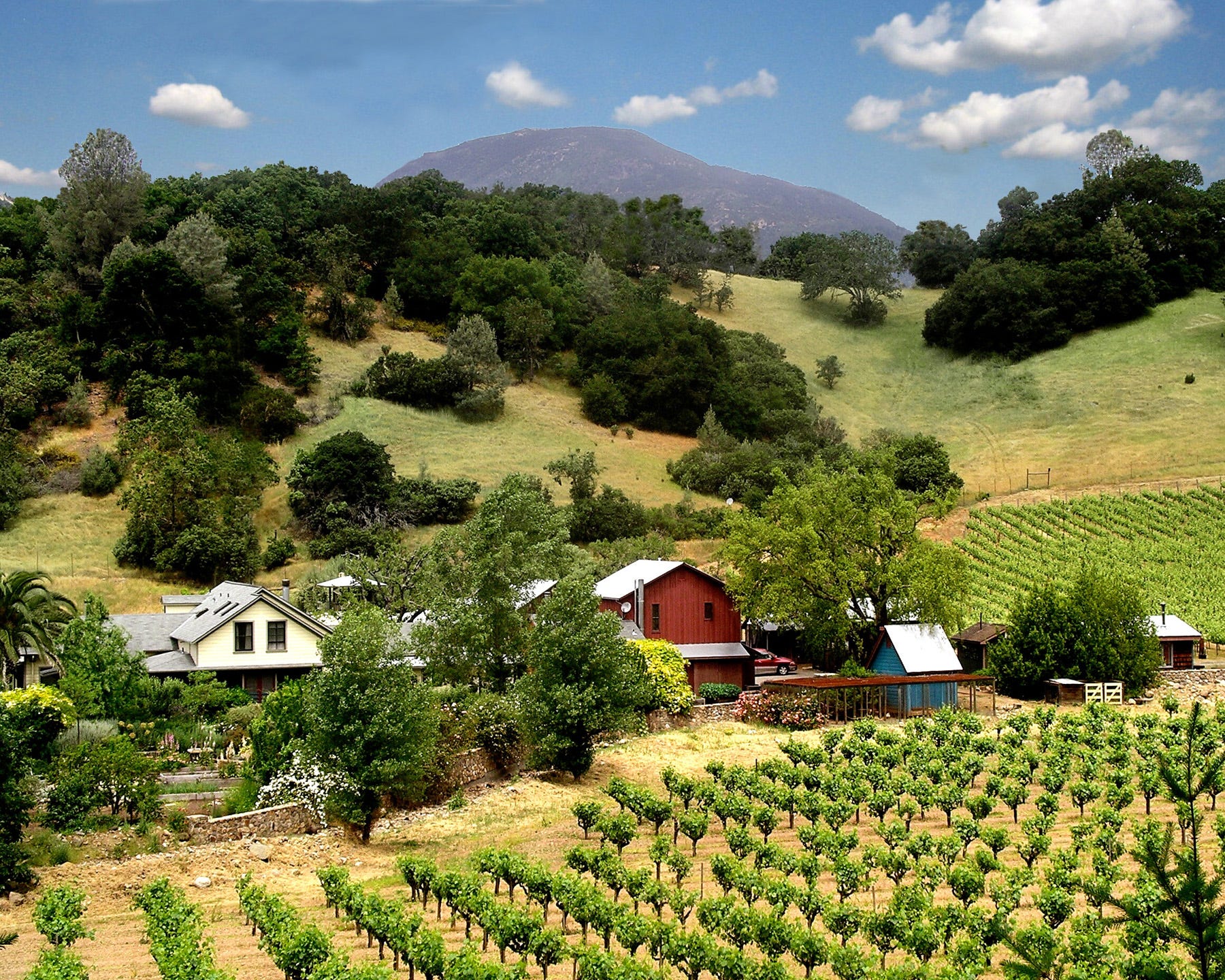
Start with the transaction that defined the past three decades of Napa viticulture. A couple — successful elsewhere, in software or medicine or law — buys a home in the valley with a few acres of Cabernet out the kitchen window. A family holds ground since the walnut days, keeping 15 acres in vines because the grape checks have been good to two or three generations. An investor assembles a small parcel on the assumption that Napa land values only go up.
In each case the arrangements look the same: a vineyard management company farms the property, a winery buys the fruit under a long-term contract, and the owner receives a check every November that exceeds the farming invoices by a comfortable margin.
A small Cabernet block on the valley floor — three to five acres, owned free of debt — grossed somewhere between $96,000 and $160,000 at recent contract prices and paid $40,000 to $70,000 in farming costs, netting its owner $50,000 to $90,000 a year for doing, quite literally, nothing. The vines were an annuity with a view.
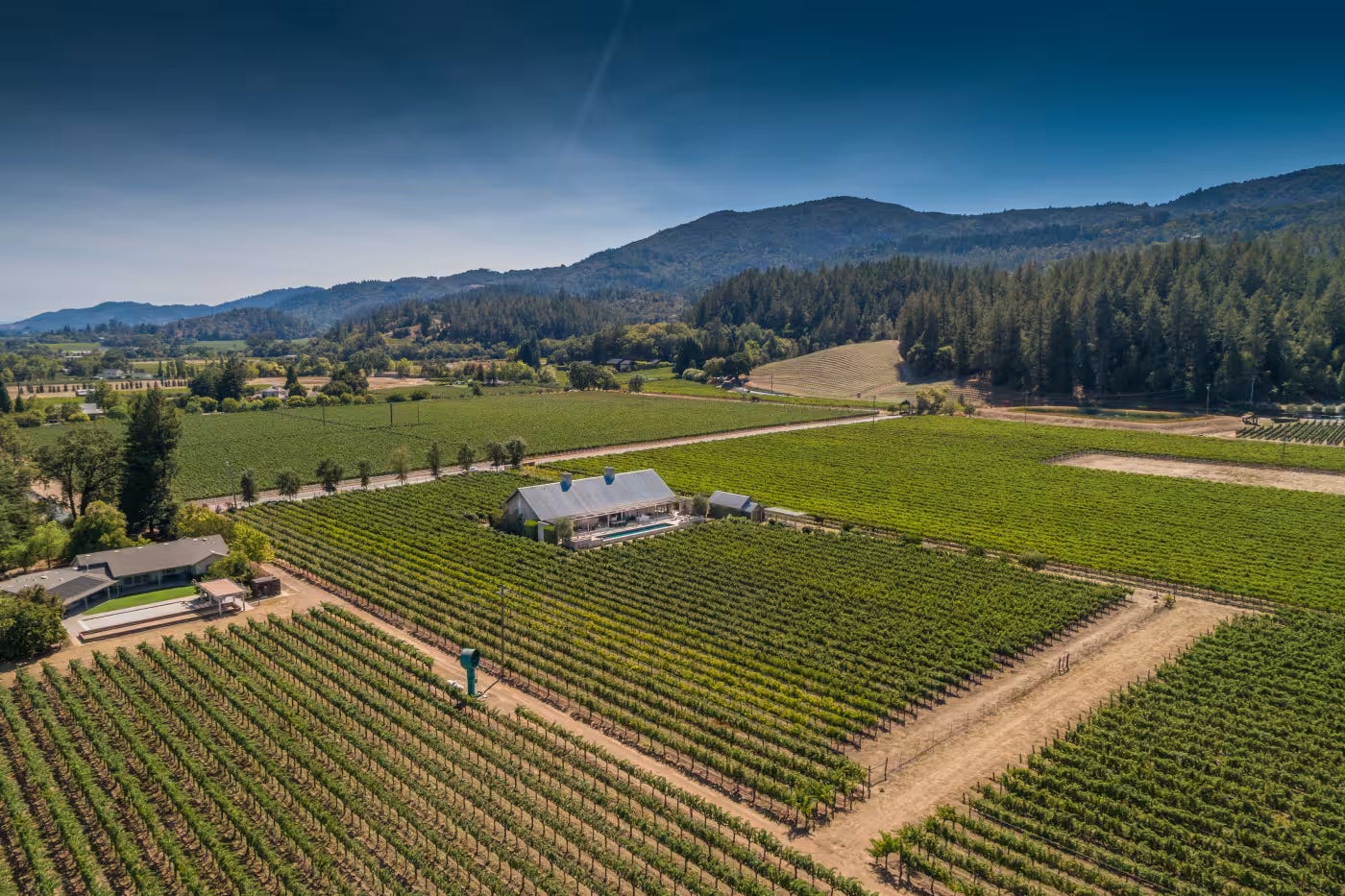
A lifestyle homeowner often never ran the arithmetic at all. For a meaningful share of the valley’s small parcels, the vineyard was purchased as landscaping — the most expensive ground cover in America, planted because a Napa property with vines is a Napa property, and one without them is merely a house. These owners filed the farming bill mentally beside the pool service. The grape check, when it came, was a pleasant surprise rather than a return anyone was counting on.
The arrangements felt durable because, for a time, the signals all pointed the same way.
What no one saw — because the valley’s signals gave no way to see it — was that more than 200 new wineries entering the luxury segment over the past two decades would collectively create the crowding that market forces are now correcting. Together, they created genuine demand for exactly what small independent owners could supply: boutique parcels, hand-farmed fruit, a story about a specific hillside or a specific terroir that a larger estate could not offer. The new wineries needed the prestige of small-lot sourcing. The small owners needed buyers willing to pay a premium above the Napa average.
The most skilled vineyard managers positioned themselves as the connective tissue between the two — the guarantors of quality that justified the premium. Everyone’s story reinforced everyone else’s.
The demand was real, the prices rose, and then the market correction began. Now, as the harvest checks are disappearing and the grape contracts are not renewing, the small independent growers have few good moves.
Two Kinds of Balance Sheet
Wineries and growers face the same market correction, but they meet it with entirely different balance sheets, and that difference determines the sequence of pain.
A winery holds inventory. Barrels in the cellar and cases in the warehouse are assets a lender will finance, which means a winery in a downturn can borrow against its unsold wine, stretch its timeline, slow its releases, and wait. A 2023 Cabernet unsold in one vintage year can be sold the next, often at full price. Whatever else ails the winery business — and the earlier essays catalogued plenty — it possesses the two great cushions of any downturn: financeable inventory and discretion over timing.
A grower has neither. Grapes convert to cash exactly once a year, at harvest, and only if someone agrees to take them. There is no inventory to borrow against, because the inventory rots on the vine the week it is not picked. The costs, meanwhile, arrive monthly all season long: pruning in February, mildew sprays through spring, canopy work in June, and the management fee every month regardless.
The grower finances ten months of expense to reach a single payday, and if the payday fails — if the contract is not renewed, or the winery calls in July to say they are passing on the vintage — the expense has already been incurred. Many small growers also carry debt from land purchases made at prices only grape contracts could justify. Remove the November check and the property converts, in a single season, from an annuity into a liability.
The lender’s position makes it worse. Most Napa vineyard land was appraised and financed against a value that assumed producing vines and an active fruit contract. When the contract lapses and the fruit goes unharvested, the appraisal assumption that justified the loan evaporates — but the loan does not.
Vineyard appraisals have been slow to adjust; many still rely on comparable sales from 2021 and 2022, and an owner who believes the equity cushion is intact because the last appraisal said so is relying on a number the market has already moved past. The conversation with the lender that the earlier essays recommended for winery owners applies with equal urgency here — and the earlier it happens, the more options remain.
When commentators say the wine industry is oversupplied, they picture no tank space and bulk sale listings. The sharper truth is that much of the excess grape supply is being carried on the personal balance sheets of a thousand families and retirees who cannot finance a wait and were never told they might have to.
This asymmetry deserves more attention than it gets. The winery’s problem is a business problem: revenue below plan, inventory above target, capital stretched across a correction that may eventually resolve. The small grower’s problem is different in kind. It is a personal balance sheet with a monthly farming invoice attached to an asset whose income has stopped, in many cases against land debt that was never underwritten for a season without a grape check. Those are not the same situation.
The two balance sheets will not resolve the same way. The difference begins with the cost structure that made small-parcel viticulture possible in the first place.
The Cost of Small Scale
The mechanism that made small-parcel viticulture possible at all was the vineyard management company. The Napa County permit file covers 1,949 vineyard sites, and roughly 66 management companies farm more than half the county’s producing vineyard acreage — across some 1,375 sites, with a median site of just eight acres. Of the 1,150 independent sites whose owners neither farm the ground nor make wine from it — representing 39 percent of the county’s producing vineyard acreage — every one is farmed by a management company.
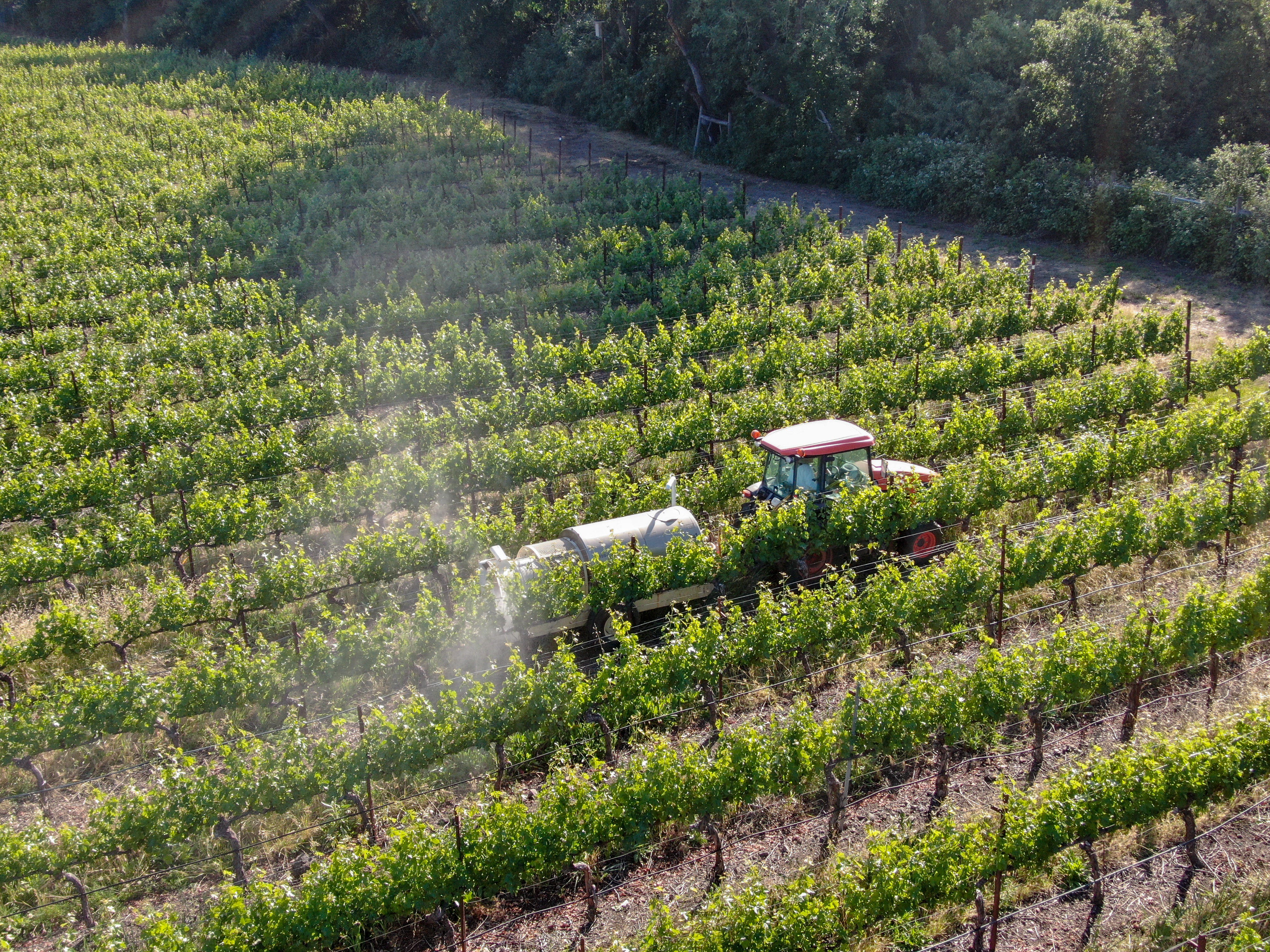
No rational person buys a tractor, a sprayer, and a spray license for a site of five acres or fewer, so the management companies supply the equipment, the crews, the compliance paperwork, and the expertise, spread across a client list. In concept, they are agriculture’s oldest efficiency — shared capital across small holdings.
In practice, in Napa, they became the mechanism through which small-scale viticulture was made to look economically rational for clients who were not primarily farmers. They are genuine professionals delivering genuine expertise — but operating under a fee structure whose incentives pointed toward intensity of service rather than return on investment for the owner.
The structure is the tell. The dominant Napa farming contract is cost-plus: time and materials at posted rates, plus a monthly management fee per acre. Under cost-plus, every inefficiency of small scale passes straight through to the owner. A crew’s drive time, a half-day minimum for a two-hour job, one portable sanitation unit required per site however small — all of it lands on the invoice.
The result is a cost curve that punishes exactly the clients the industry recruited. Farming a 100-acre ranch runs about $13,400 an acre at current costs. A 10-acre block runs roughly $14,400. The smallest sites — one to three acres — cost over $18,000 on the valley floor and over $23,000 on a hillside. The smallest owners pay the highest rates in American viticulture to farm the least efficient blocks in the county.
The Escalator
The grape contract of the boom years was a remarkable piece of machinery, and its incentives ran uphill by design.
The standard premium arrangement priced fruit at a premium to the Napa County average for the variety — the district average price, published annually in the crush report, plus 10 or 20 or 40 percent depending on the site’s prestige. Consider what that formula does when many contracts use it. Every above-average contract raises next year’s average, which raises every contract indexed to it, which raises the average again.
Compensation consultants built the identical machine for corporate CEOs decades ago: no board wants to pay its chief executive below the median, so every board pays above it, and the median climbs forever.
Napa grape pricing had the same built-in escalator, and for twenty years it worked exactly as the arithmetic predicted. County-average Cabernet went from roughly $4,000 a ton in 2010 to $9,146 in 2024 while the volume of genuinely price-setting transactions grew thin.
Wineries agreed to this escalator because it was, for a long stretch, the cheapest capital they could buy. A winery that needs 40 acres of Cabernet can purchase the land at $300,000 to $500,000 an acre — call it $15 million, on the balance sheet, forever — or it can contract for the fruit and let someone else own the dirt.
The contract route converts a capital problem into an operating expense and lets the owner of the land carry the mortgage, the replant risk, and the frost. Measured properly, contracting was off-balance-sheet vineyard financing at an attractive effective rate, and the ratcheting price was simply the coupon.
The arrangement carried a second convenience that nobody priced at the time. Modern luxury winemaking, in its pursuit of scores, became extraordinarily demanding in the vineyard: shoot thinning, leaf pulling, a green drop at veraison (when the grapes begin to ripen and change color), a second pass before harvest, yields held to 2.5 tons on ground that could carry four.
Every one of those instructions costs money. Under the contract system, the winemaker issuing them bore none of the cost. The demands flowed to the management company, which executed them enthusiastically — more passes, more billable hours — and invoiced the owner, who paid without complaint because the owner was not reading invoices for return on capital. The owner was in it for the November check and the pleasure of saying whose label their fruit went into.
A winemaker chasing a 98-point score controlled the farming intensity without controlling the farming invoice — the cost was embedded in the contract price rather than in the winery’s own books, which made it easy to ignore and easier still to increase. The owner enjoyed the prestige. The management company enjoyed the revenue. Every incentive at the table pointed the same direction, and the direction was up.
The rising grape cost fed a second escalator. As fruit prices climbed, so did the cost of goods for every winery buying on contract — which pushed bottle prices higher to preserve margins. Higher bottle prices pulled wineries further into the luxury segment, which justified more intensive farming, which raised scores, which justified higher bottle prices again. Winemakers got better scores, growers got higher prices, management companies got more billable passes through the vineyard, and wineries got the luxury positioning their owners expected. The system reinforced itself at every turn.
It all worked until it didn’t. The earlier essays made that case in full; the grower’s farming economics confirm it from the grape cost side.
Why the Small Parcel Went First
The system had one real friction, and it partially explains the sequence of what follows. Managing dozens of small fruit sources is expensive. A winemaker visit to a scattered portfolio of small sites means a trip for each — the same drive time, the same preparation, regardless of whether the block is three acres or 30. Harvest logistics for a small lot — a separate pick crew, a separate small delivery, separate tank space — cost nearly as much to coordinate as a 100-ton contract.
Small-lot fruit carried the highest oversight cost per ton in the winery's supply book. Larger wineries maintain dedicated grower relations staff to manage their contracted portfolio; smaller wineries require the winemaker's own time at each site. Either way, the cost per ton on a three-acre block is multiples of what the same attention costs on a fifty-acre contract. It was absorbed easily when every case sold and became insupportable the moment cases stopped selling.
When wineries began trimming their fruit programs, they did not start with their own estates, and they did not start with the large professional growers. They started with the small-parcel contracts.
Step back and look at the machine as a whole, because the valley will not soon build its equal. The owner supplied capital and asked to be paid in prestige. The winemaker supplied ambition and asked someone else to fund it. The management company supplied labor and expertise, and was paid more the more intensively it farmed — while the ratcheting contract price kept its clients enrolled and its client list growing. The winery supplied demand and got its vineyard financing off the balance sheet at a coupon it was happy to pay in a rising market.
Every seat at the table held an incentive pointing up. The one seat that durable businesses always keep filled — occupied by whoever asks what the whole arrangement costs and what happens to it if demand ever falls — sat empty for twenty years.
The estate winery model, whatever its other burdens, keeps that chair filled by necessity: one owner internalizes the farming cost, the winemaking ambition, and the market risk, and behaves accordingly. The contract system distributed those pressures so widely that no participant felt the full weight, and systems in which nobody feels the full weight run until the day they stop. The question is who is holding what now.
A Valley of Small Landlords
To understand who is actually exposed, it helps to look at the ownership data that the permit file makes possible. Napa has no dominant landlord. Treasury Wine Estates controls about 2,835 permitted vineyard acres — roughly 6 percent of the county. Behind Treasury come the Laird family at about 1,514 permitted acres, Constellation at 1,321, Gallo at 1,277 including Stagecoach, and Beckstoffer at 1,022. Those five are the only owners above a thousand acres, and together they hold barely a sixth of the valley.
The 25 largest owners combined — every corporate name in the business, plus the great grower families — control about a third. Everything else belongs to a long tail of roughly 1,400 identifiable owners, 72 percent of whom hold fewer than 20 acres.
Wineries farm their own estates on about 29 percent of the county’s acreage. Self-farming independent growers — the professional class, from Laird and Beckstoffer down to families running their own tractors — account for around 16 percent.
That leaves the largest single segment: roughly 18,000 acres, 39 percent of the county, spread across 1,150 sites owned by independents who neither farm the ground nor make wine from it. The entire relationship to their vineyards is payments on the farming invoices going out and a grape check coming in.
The Cascade
The market story has been told in earlier essays. What matters for the grower is the path — how a winery’s inventory problem becomes a grower’s existence problem — and it was swift.
Multi-year contracts quietly became one-year agreements at renewal. One-year agreements became “we’ll call you in July.” And the calls, for hundreds of small growers, never came.
The valley’s own numbers tell the story: about 8,000 acres — roughly 20 percent of Napa’s vineyard base — went unharvested in 2025, according to Allied Grape Growers; more than 3,100 acres were removed between October 2024 and August 2025, according to the California Association of Winegrape Growers. New Napa plantings collapsed from 520 acres in 2020 to 42 in 2025. A vineyard region stops replanting only when the people who own the vines have stopped believing the next 25 years will pay for them.
Overlaying the ownership data on the cost data locates the pressure precisely. About 9,100 acres across some 1,126 sites sit in an elevated-pressure zone: independently owned, farmed by management companies, in parcels under 20 acres or on hillside ground where costs are highest. Within that zone, the extreme cases — small independent hillside sites, where cash costs run near $19,000 an acre against yields barely above 2 tons — cover about 1,800 acres across nearly 300 sites, with a median size under five acres.
The pressure is heaviest where contract-dependent ownership is most concentrated: Howell Mountain, Spring Mountain, and the other hillside appellations generally (an appellation is a legally defined growing subregion within the valley), where farming costs run highest. At the other end, the trophy appellations — Oakville, Rutherford, Stags Leap — have the least exposure, because wineries long ago bought the ground they depend on.
Oak Knoll sits between them: subdivided into smaller parcels earlier and more thoroughly than most of the valley, and heavily dependent on outside buyers. All of these appellations grace some of the most ambitious labels and are, structurally, the ones where many owners cannot now afford what their vineyards cost to farm
One appellation shows the anatomy more clearly than any other. Coombsville, the valley’s youngest fashionable address, has the most fragmented ownership in the county: a median site of under four acres, six of every ten sites below five acres, and 58 percent of its ground owned by independents whose fruit moves only if a management company farms it and a winery calls. Its structural cash breakeven runs near $5,800 a ton — modest relative to the hillside appellations, but unreachable in a market with excess supply.
Coombsville was built parcel by parcel during the boom’s last decade on precisely that machinery: contract-financed purchases, cost-plus farming, ratcheting prices, absent scrutiny. It is why the correction is finding it first. The appellation that arrived last is leaving first, and the owners who were sold a story about Napa’s enduring prestige are discovering that prestige is the last thing to sustain a farming business when the payday stops.
Put a human denominator under those numbers. The 1,126 pressure-zone sites belong to roughly a thousand distinct owners — the typical holder owns a single site and nothing else. A thousand households, each facing the same decision, each deciding alone, most of them for the first time.
These thousand-plus small owners represent the overwhelming majority of the people facing a vineyard decision, yet they control only about 15 percent of the county’s planted vines. The extreme-pressure cases — the roughly 300 hillside sites facing economics the spot market cannot support — cover about 1,800 acres, less than 4 percent of the county’s total bearing base. The correction that is generating the most individual hardship is concentrated in a segment that is large in human terms and modest in acreage terms.
That does not make it less real for the people carrying it, but the independent grower sector is both large enough and marginal enough to absorb almost all of the required adjustment — which is why the valley’s aggregate production will not collapse even as hundreds of families face decisions that feel, to them, like the whole market coming apart.
The Arithmetic of Staying and Going
Every owner in the pressure zone now faces the same three-way choice: farm for the spot market, mothball, or remove. The arithmetic is cleaner than the conversation usually acknowledges.
Farming for spot makes sense only above a threshold. Fruit already hanging is worth picking whenever the price clears harvest cost — a few hundred dollars a ton — but committing to farm a new season is a different bet.
That bet requires understanding what the market is actually paying. The Crush Report average of roughly $9,000 a ton reflects contracted fruit only. In 2025, spot market Napa Cabernet traded between $2,000 and $6,000 a ton — and some fruit found no buyer at any price.
The full cash cost of a small valley floor vineyard runs $16,000 to $18,000 an acre. At 3.5 tons, that requires roughly $2,700 to $3,700 a ton just to break even on cash, before any return on land worth hundreds of thousands per acre. On the hillsides, with yields near 2.25 tons and costs pushing $20,000, the walk-away price sits between $6,000 and $7,700 a ton. In a market with excess supply, contract prices are unavailable and spot prices are insufficient. The arithmetic answers itself.
Mothballing — minimal farming to keep vines alive while awaiting recovery — sounds prudent and usually is not. Keeping a vineyard on life support still costs roughly 45 percent of full farming, call it $5,000 to $7,000 an acre a year. And California has now closed the cheaper alternative of simply walking away: a new state law that took effect at the beginning of 2026 gives county agricultural commissioners authority to penalize landowners whose neglected properties become pest reservoirs, so doing nothing is no longer a lawful option.
Removal, by contrast, costs $5,500 to $9,000 an acre on the floor and up to $11,000 on steep ground once erosion control is figured in — a one-time expense that pays for itself against mothballing costs in 14 to 17 months. The decision rule falls out plainly: mothballing is rational only if an owner genuinely expects a contract within about two years. Beyond that horizon, pulling the vines dominates, and every year of waiting burns a removal’s worth of cash.
How Much Is Leaving
How much removal is coming? The honest answer is a range, but the range has a floor. For the 1,800 extreme-pressure acres — small hillside sites where cash costs exceed what any realistic spot price will cover — the economics are unambiguous: continued farming requires prices the spot market will not pay under any plausible recovery scenario. Most of that ground exits viticulture in this cycle, whether its owners have accepted the fact or not.
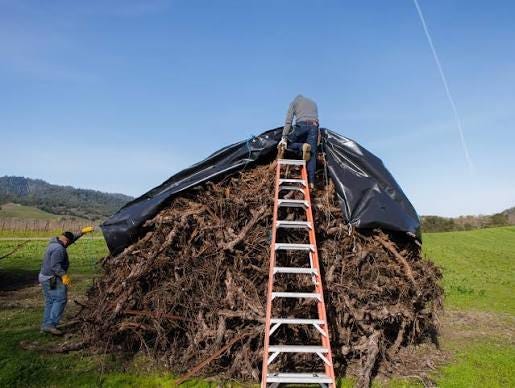
The broader 9,000-acre pressure zone will split according to appellation, debt load, and temperament, but if even a third of it converts, the county loses 3,000 additional acres on top of the thousands already gone — a contraction approaching a tenth of Napa’s bearing base within a few years.
The replanting statistics state it plainly: much of what leaves will never return. A small hillside block — five acres or under — that costs $75,000 an acre to replant into a market that no longer writes small contracts is not a vineyard awaiting recovery. It is a former vineyard, and the sooner its owner accepts that, the less it will cost them.
Before reaching that conclusion, however, every owner owes themselves an honest assessment of what their ground actually is. Some small parcels are genuinely distinguished — by soil, aspect, microclimate, drainage, or water availability — in ways that make them worth farming through a correction. Fruit from a truly distinctive site will find its way back into the system when the market stabilizes; a winery that built a reputation on a specific terroir will return for it.
The question every owner needs to answer, clearly and without sentiment, is whether their ground is genuinely distinctive or a marginal planting made for reasons that had nothing to do with winegrowing. For the former, patience may be the correct response. For the latter, the arithmetic of waiting is simply the arithmetic of loss, deferred.
When the Farm Is the Family
The self-farming independent grower faces a harder version of the same arithmetic. Perhaps 270 independent operators farm their own ground — real farmers, many from families that have worked this valley for generations. When a winery loses a customer, it can discount. When it loses a vintage, it can hold inventory. A self-farming grower who loses a contract has no equivalent move. These families have the most skin in the game, the deepest knowledge, and, in a prolonged correction, the fewest exits.
Many of these growers entered viticulture not because grapes were their first love but because grapes out-earned every alternative crop their parents or grandparents grew. Walnuts and prunes and cattle preceded the vines on most of this ground, and the families kept farming through those cycles too.
What they face now is not simply a market correction but a question about whether the intergenerational logic that brought them into wine grapes still holds. In many cases it does not, and the path forward — to different crops, to grazing leases, to land sales, to standing down a farming operation built over decades — requires an honesty that is hard to arrive at alone and harder still to say aloud in a valley whose identity is so thoroughly bound up in the prestige of its product.
For other families the vineyard was an inheritance — the principal asset a parent built over a lifetime and passed down as evidence of what they had achieved. The vineyard was not farmed directly, but it remained as a valued family asset. It provided income that was shared among the extended family. Now it is generating invoices. The family, which was never quite a decision-making body, is suddenly required to become one, at the worst possible moment, on a question none of them are prepared for.
A Different Kind of Trap
One apparent exit is available to any grape grower who loses a contract, and it is worth examining because the reality is worse than it appears.
Any grower without a buyer can pay a custom crush facility to make wine from the fruit, then sell the resulting wine to a label or on the bulk market. In a rising market, this captured more of the value chain — the grower margin plus a piece of the winemaking margin — and it worked.
But now it compounds the problem. The grower has already spent the farming cost. The grower then spends the custom crush cost on top of it.
The result is bulk wine in a market glutted with bulk wine, competing against large estates and distressed wineries with far more volume and far lower per-unit cost. The arithmetic that looked like opportunity when demand was rising becomes a two-stage loss when it is falling: the farming investment, then the crush investment, both sunk before the market delivers its verdict.
For most growers without a contract, there is no good exit — only a choice of which loss to take.
Who Does What Now
Corrections sort populations, and this one is sorting Napa’s owners into responses as different as their balance sheets.
The corporate holders move first and quietest. Treasury, Constellation, and Gallo manage vineyard portfolios the way they manage brand portfolios. They have already begun pruning both — exiting leases, removing their own weakest blocks, letting purchased-fruit contracts lapse. Their discipline, ironically, is the healthiest force in the market: they cut supply without sentiment and without press releases.
For the corporate holder, removal is one decision among many. For the small owner, it is the whole decision.
The estate producers hold. A winery whose label depends on its ground treats the vineyard as brand collateral rather than as a profit center, and will farm through the trough because the alternative undermines the asset that matters. Their pressure surfaces as margin compression in the wine business, which earlier essays have covered. Nearly 19,000 winery-controlled acres sit in this comparatively sheltered position.
That shelter depends on the winery surviving — and as the earlier essays made clear, many will not. When a winery restructures or changes hands, some of its estate vineyards may come onto the market. Those blocks tend to be the better ones, and surviving wineries will have a wider choice of proven, high-quality fruit — which puts every marginal independent under additional pressure.
The large independent growers occupy the strongest position in the independent grower economy precisely because they are everything the small owner is not. Laird, with its 1,500-plus permitted Napa acres and customer list of 60 wineries, is diversified across dozens of buyers at costs well below the small-parcel rate. Beckstoffer holds the valley’s most celebrated vineyard names under long-term contracts with prestige wineries that depend on those sites for the wines that define their brands — a different kind of durability, but durability nonetheless. Both hold land purchased decades ago at prices that require no defending.
Some large growers will quietly become buyers — of distressed ground, of orphaned contracts, of neighbors’ equipment. Consolidation in a correction flows toward whoever has scale and patience, and they have both.
The small owners face the hard end of this correction. Their responses will divide by what the vineyard was to them. For the lifestyle owner with no debt, the honest move is often the simplest: stop pretending the hobby is a business, pull the vines, and enjoy the view without the invoices.
The residential market will feel this too. Napa estate listings have long marketed “plantable acres” as a premium feature — the implication being that undeveloped ground could be brought into production, adding both income and prestige to a property. In a market where new contracts are not being written and where establishing a new vineyard runs $75,000 an acre or more before the first harvest, plantable acres are no longer a premium.
The vineyard was not just an annuity for its owner — it was a valuation input for the whole property. When one goes, the other follows.
For the leveraged owner, the choices are harder and the timeline shorter, and the earlier the conversation with the lender, the more options survive it. For the legacy families, the decision is generational and deserves to be treated that way — which argues for making it deliberately, with real numbers, rather than by drift.
The Adviser’s Incentive
The management company’s incentive structure is worth understanding, because it shapes the advice small owners receive at exactly the moment they most need disinterested counsel. The fee structure is straightforward: income flows while the vineyard is being farmed, falls while it is mothballed, and stops entirely when the vines come out.
That structure does not reflect on individual professionals — many farming managers in this valley give genuinely candid counsel, including counsel that costs them revenue. But in aggregate, a fee structure tied to continuation will tilt toward patience, toward readings of the market that favor another season, toward the view that the correction is temporary.
Owners seeking advice on whether to stay or go should understand that incentive, ask to see the walk-away arithmetic worked for their own parcel, and weigh the answer accordingly.
Across the valley, the adjustment is stickier than the arithmetic requires. A management company may want to continue farming a vineyard even when its owner may need to stop. But this is a small valley, and the firms that will be farming in twenty years are the ones whose clients will remember being told the truth when it cost something to say it.
Why the Contracts Will Not Come Back
The last question small growers ask is whether the contracts will return when demand recovers. For this segment, the answer is almost certainly no — not at scale, not on the terms that made the annuity model work.
Wineries burned by long commitments have relearned the value of flexibility and will not soon lock in supply again, least of all high-cost supply from small parcels that require disproportionate oversight. When a winery re-enters the fruit market, it faces a choice between a professional grower offering scale, consistency, and a single phone call, and a small parcel offering the highest oversight cost per ton in the valley. The small owner cannot win the business on price, either.
The cost-plus farming bill sets a floor under any discount: an owner paying $18,000 an acre to farm cannot profitably undercut anyone.
The small vineyard entered the boom as the marginal supply in a rising market and exits the correction in the same position, but the direction has reversed. Marginal supply absorbs the whole of the variance in every commodity system. Napa, whatever its tasting-room prices suggest, obeys commodity arithmetic at the fruit level.
The marginal acre is the last supply added in a rising market and the first eliminated when it falls. That is what “marginal” means.
Not all growers face this equally. The small owner whose fruit has long supplied an established estate — a winery whose identity is built around a specific site or appellation — occupies a more durable position than one whose contract runs to a marginal luxury brand. Careful analysis suggests that between 100 and 170 of Napa’s roughly 400 small wineries — roughly 25 to 40 percent of that segment — are under significant economic pressure and unlikely to sustain their current programs without material change. When those wineries retrench, their fruit contracts go first.
The grower who supplied a winery that could not defend its own price point will find the contract gone before the winery itself restructures or changes hands — and when that eventually happens, some of its estate blocks are likely to enter the open market and put further pressure on whoever is left.
The correction will not fall evenly on the management companies, either. A firm whose client list skews toward larger, more stable independent owners — well-capitalized operators with diversified customer lists and durable contracts — will weather this cycle with margin pressure but without existential threat. A firm whose client list skews toward small independent owners in high-cost appellations faces something structurally different.
Every vineyard removal that makes economic sense for the owner runs the same arithmetic against the management company’s revenue. If a third of a firm’s client acreage exits viticulture — a plausible outcome for firms concentrated in Coombsville, Howell Mountain, and Spring Mountain — the revenue impact is not a margin compression. It is a restructuring.
The correction that is thinning the valley’s small-owner ranks will thin the management company ranks too, and the firms most exposed are the ones whose growth was built on exactly the same logic the small owners used: prestige, rising prices, and the assumption that Napa contracts only went up.
The Opportunity Hiding Inside the Correction
Several thousand Napa acres will leave viticulture in this cycle, most of them in small parcels whose owners have more attachment to the ground than clarity about what to do with it. That transition, difficult as it is for the individuals inside it, also contains a genuine business opportunity that has not yet been organized.
At this moment there exists no organized business serving them — someone who will price and execute a removal, handle the erosion and pest compliance, and think clearly about what follows. For some parcels, specialty fruit or vegetables — farmed at the scale the site allows, sold into the valley’s network of restaurants, farmers markets, and direct consumers — can generate modest but real income.
The first firm that packages exit-and-transition as a single service, priced honestly, will find several hundred customers and will do this valley a considerable favor.
For others, the honest answer is a grazing lease, a conservation easement, pollinator habitat, or simply land that serves the family rather than the market. None of those outcomes require the farming overhead that viticulture does, and most of them beat paying $6,000 an acre a year to keep an unwanted vineyard on life support.
There is historical symmetry here. Ken Laird’s first Napa purchase, in 1970, was 70 acres of worn-out prune trees adjacent to Tubbs Lane in Calistoga — ground he converted to grapes with no prior viticulture experience, financing the deal through a partnership with Robert Mondavi. The valley converted from orchards to vineyards one parcel at a time, on the arithmetic of that era, and it can convert some acres back the same way. Land is the patient party in every agricultural cycle, and the ground will find a use.
A Valley Feeling the Weight
The earlier essays in this series focused on winery owners navigating a crowded luxury market. That framing is not wrong, but it is incomplete.
More than 200 new wineries entered Napa’s luxury segment over the past two decades — and it was their demand that recruited the growers, their contract terms that enrolled them, and their ambition that used the growers’ land as off-balance-sheet vineyard financing on the way up. Over twenty years, many of those wineries entered without considering how many others were doing the same — building luxury programs on the same Napa Valley brand. Then the market delivered its verdict.
The reckoning is the consequence of individual decisions that, in aggregate, overwhelmed a shared resource. Any one of those wineries, entering the market alone, might have built a sustainable program. The problem was that too many were pursuing the same thing at the same time — drawing on a shared Napa Valley brand whose authority none of them owned and none of them could protect. Too many entrants chasing the same elevated ground thinned the very thing that made the ground worth having.
The market correction now facing the growers is the consequence of that collective arithmetic. The small independent growers did not create the excess, but they are among the first to share its consequences.
The marginal acre is absorbing it first — before many of the wineries whose strategies created the system have themselves restructured or changed hands. Everything attached to the marginal acre feels the correction.
The valley that emerges from this correction — somewhat smaller in vines, with ownership more aligned to its economics, returned in places to pasture, specialty crops, and wildlife habitat where marginal Cabernet used to be — will be a structurally healthier place than the one that pretended every acre penciled.But the burden of the transition will be felt throughout Napa Valley’s small rural community. Jobs will be lost as the intensively farmed vineyard footprint permanently shrinks. Vineyard management companies will be smaller. Some may withdraw. And, at the same time, more than a thousand households are losing income they counted on.
For some of those households the vineyard income was supplemental — a pleasant addition to a professional salary or a retirement portfolio. For others it was the annuity they depended upon, the check that paid the property taxes and the farming bill and left something over. When it stops, it stops all at once, across a community small enough that the cumulative effect is visible. Fewer restaurant visits. Less vigorous local charity auctions. A quieter October than anyone remembers.
A thousand households, each asking what to do with ground that no longer pays, largely alone, with no organized help, in a valley that spent thirty years building the machine.
* * *
Ted Hall is a vintner and rancher at Long Meadow Ranch in Napa Valley. A winemaker for more than 50 years, he was named the 2017 Grower of the Year by the Napa Valley Grapegrowers. A former chairman of Robert Mondavi Corp., he is also a Senior Partner Emeritus at McKinsey & Company and a founder of the McKinsey Global Institute. He writes about economics, incentives, and how complex systems shape real-world outcomes across agriculture, food, wine, and consumer markets.
The experiences behind these essays are collected in a memoir of the same name, Tell the Truth and Do the Right Thing — 125 stories from a life that has included McKinsey, Napa Valley, a Pacific crossing, and the Village Vanguard.
Ted, Your comprehensive series of articles have clearly informed all of us of the multitude of factors/behaviors leading to the current sad situation facing the Valley's farmers and wine makers. Each article is worthy of an MBA thesis. Thank you, Dan
Spot on. Thank you for getting it right and telling it straight.
Over the last year I have had conversations with several small hobby growers who can’t see the light clearly in front of them. They are kicking the can down the road on dreams things will return to what they were. They won’t.
Keep up your good work and thank you for opinions grounded in solid research.